
WELCOME BONUS 300%
UP TO €2000 + 100
FREE SPINS
UP TO €2000 + 100
FREE SPINS
Home → Blackjack
Blackjack at Playio: Variants, Rules and Payouts
Blackjack doesn't count for every bonus offer
The 300% welcome bonus up to €2,000 plus 100 free spins has specific contribution rules for different game types. Table games, including blackjack variants, contribute only 10% towards meeting the bonus wagering requirements. This means a €10 bet on blackjack only counts as €1 towards the turnover requirement, effectively reducing its value for bonus clearance.
Slots, conversely, contribute 100% to the bonus turnover. Therefore, a €10 bet on a slot game counts as a full €10 towards the wagering. This disparity significantly impacts how players can best utilize their bonus funds, making blackjack a less efficient choice for clearing the bonus quickly.
Given that blackjack contributes only 10%, a €2,000 bonus with a 40x wagering requirement would necessitate €80,000 in total bets. If only blackjack were played, this would translate to €800,000 in actual wagers due to the 10% contribution, a substantial sum to wager.
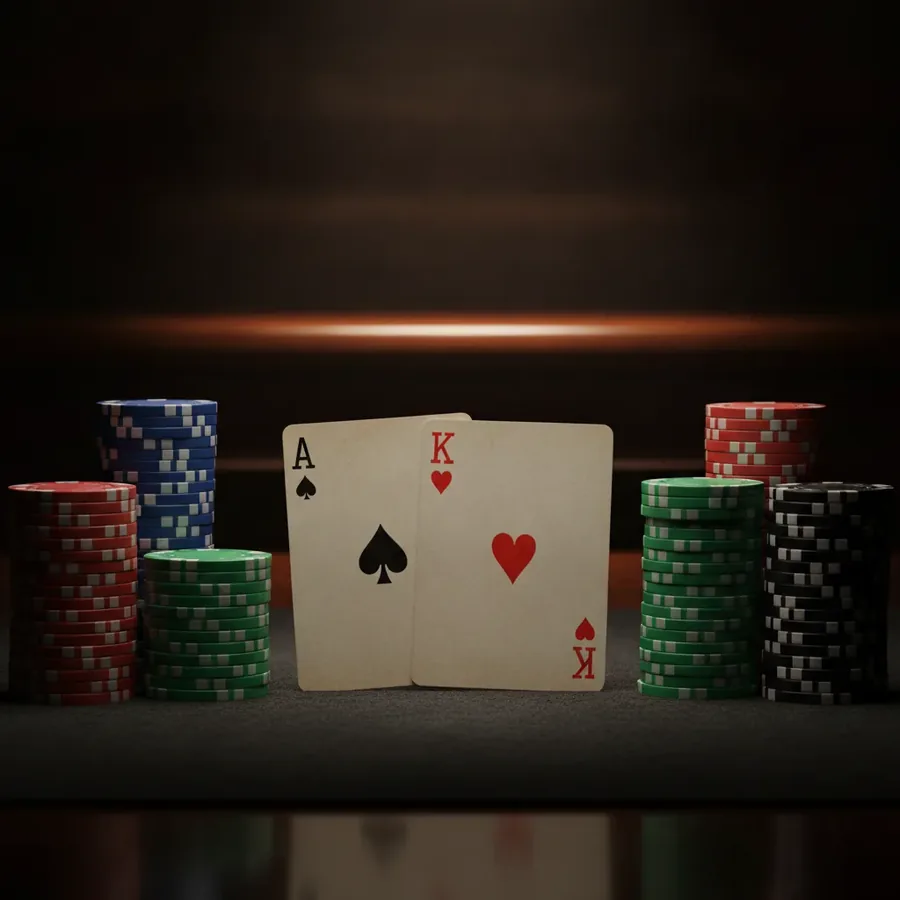
16 vs 10 played incorrectly: most common error
A frequent strategic error in blackjack involves hitting on a hand totaling 16 when the dealer shows a 10. Basic strategy dictates that this is a losing proposition in the long run, with a 7.47% house edge for Blackjack Insurance if the side bet is taken. This specific scenario highlights a common player deviation from optimal play.
The Blackjack 6 Decks variant, with a 0.46% house edge under optimal basic strategy, still presents this challenge. Players often opt to hit, hoping for a low card, but increasing the risk of busting. The RTP for this variant is 99.54%, but incorrect play significantly degrades this figure.
Choosing to stand on 16 against a dealer's 10, while seemingly risky, is statistically the superior move over time, even in games like Blackjack Liberal Vegas Strip with a low 0.28% house edge. This illustrates how a single common mistake can have a pronounced negative impact on a player's return.
Why Loss Progression Quickly Reaches Table Limit
The concept of loss progression is directly tied to the volatility of blackjack and the potential for rapid bet increases. While not directly stated for Playio, typical table limits in live blackjack, such as Infinite Blackjack and Lightning Blackjack with limits up to €5,000, can be reached swiftly with aggressive betting strategies.
In a game like Quantum Blackjack Plus Live, where multipliers can reach up to 1,000x on certain card combinations, the potential for quick losses or wins is amplified. If a player employs a system that increases bets after losses, even a few consecutive losing hands can escalate the bet size dramatically.
For example, a progressive betting system, where bets double after each loss, can quickly reach a table limit of €5,000. If a player starts with a €10 bet and loses five times in a row, the next bet would be €320, escalating rapidly to meet or exceed the table's maximum wager.
Bet two percent of bankroll per hand
Managing bankroll effectively is crucial in blackjack, and a common guideline suggests betting no more than 2% of the total bankroll per hand. For a bankroll of €1,000, this would mean a maximum bet of €20 per hand. This approach aims to mitigate the risk of rapid depletion.
This 2% rule is particularly relevant when considering the potential house edge in various blackjack games. For instance, Blackjack 6 Decks has a house advantage of 0.46%, while Blackjack Liberal Vegas Strip offers a lower 0.28% advantage. Sticking to a small bet percentage helps absorb the inherent edge.
Adhering to a 2% betting limit helps players extend their playing time and withstand variance. A €1,000 bankroll with €20 bets would allow for 50 consecutive losing hands before the entire bankroll is exhausted, providing a buffer against short-term negative streaks.
Six Decks to Eight Decks in the Shoe
The number of decks used in a blackjack shoe can influence the house edge. A game with six decks typically has a slightly higher house edge compared to an eight-deck shoe, all other rules being equal. This is due to the increased probability of certain card combinations occurring in a larger deck pool.
For example, the Blackjack 6 Decks variant, with an RTP of 99.54%, has a house advantage of 0.46%. While not explicitly detailed for an eight-deck equivalent, a difference of approximately 0.02 percentage points is often cited for an eight-deck shoe compared to a six-deck shoe, slightly favoring the player.
The primary impact of using more decks is a marginal reduction in the house edge. A Blackjack Liberal Vegas Strip game with liberal rules but potentially more decks could offer an even lower house edge than its stated 0.28%, provided other rules remain favorable. This difference, though small, is a factor in optimal game selection.
Blackjack variants at a glance
| Variant | Payout | House edge | Rule | Bet range |
|---|---|---|---|---|
| Blackjack Liberal Vegas Strip (liberale Regeln, 3:2) | 99.72% | 0.28% | Günstigste Regelkombination: S17 + DAS + Resplit + Late Surrender. Standardabweichung 1,15 | Blackjack 3:2, Gewinn 1:1 |
| Blackjack Ein Deck, klassische Regeln, 3:2 | 99.85% | 0.15% | Weniger Decks = niedrigerer Vorteil; ein Deck gibt ca. −0.48 Prozentpunkte gegenüber 8 Decks. Oft durch 6:5 Auszahlung kompensiert. | Blackjack 3:2, Gewinn 1:1 |
| Blackjack 6 Decks, S17, DAS, DOA, Auszahlung 3:2, Basisstrategie | 99.54% | 0.46% | Dealer steht auf Soft 17; Verdopplung auf jeder Zweierkarte; Verdopplung nach Split erlaubt; keine Aufgabe. Basisstrategie ist für diesen Wert zwingend | Blackjack 3:2, normaler Gewinn 1:1, Insurance 2:1 |
| Blackjack Surrender (Late Surrender) – Regel-Effekt | n.a. (Regel-Modifikator) | −0.08 Prozentpunkte | Spieler gibt Hand nach Dealer-Blackjack-Prüfung auf, verliert die Hälfte des Einsatzes. Verbessert RTP um ca. 0.08 Prozentpunkte. Early Surrender ist wesentlich wertvoller (bis −0.6 Prozentpunkte), aber extrem selten. | Rückzahlung 50% des Einsatzes |
| Blackjack Split / Double / H17 – Regel-Effekte | n.a. (Regel-Modifikatoren) | H17 +0.22 Prozentpunkte; RSA −0.08 Prozentpunkte; DAS −0.14 Prozentpunkte | Dealer Hits Soft 17 verschlechtert RTP um 0.22 Prozentpunkte; Resplit Aces verbessert um 0.08 Prozentpunkte; Double After Split verbessert um ca. 0.14 Prozentpunkte; 6 Decks statt 8 – ca. 0.02 Prozentpunkte. | Double – Einsatz ×2 mit einer Karte; Split – bis 4 Hände; Ass-Split meist mit einer Karte. |
| Blackjack Auszahlung 6:5 statt 3:2 (6 Decks) | 98.15% | 1.85% | Ersatz von 3:2 durch 6:5 fügt exakt +1.39 Prozentpunkte zum Vorteil des Casinos hinzu – stärker als jede andere Regeländerung. Bei $10 Einsatz zahlt Blackjack $12 statt $15. | Blackjack 6:5, Gewinn 1:1 |
Bonus Lost Due to 10 Percent Contribution
The 300% welcome bonus up to €2,000 is subject to wagering requirements that are impacted by game contributions. Table games, including blackjack variants, contribute only 10% towards these wagering requirements. This means that for every €10 wagered on table games, only €1 counts towards clearing the bonus.
For a €2,000 bonus, a typical wagering requirement of x40 would necessitate €80,000 in turnover. With a 10% contribution from table games, this translates to €800,000 in wagers placed on these games. This significantly increases the amount one must wager to meet the bonus conditions.
Consequently, players primarily engaging with table games may find it exceedingly difficult to convert the bonus funds into withdrawable cash. Slots, contributing 100%, offer a more direct path to fulfilling turnover requirements, making them the preferred option for bonus wagering.
What Hole Card Means at a Live Table
In live blackjack variants like Infinite Blackjack, the concept of a hole card is not directly applicable due to the continuous shuffling process. Infinite Blackjack offers an unlimited number of seats, and the game's mechanics ensure a fresh shoe after each decision point.
Unlike traditional blackjack where a dealer's hole card can influence strategy and insurance bets, live dealer environments often employ mechanisms that mitigate the impact of such cards. For instance, Lightning Blackjack features multipliers that activate on winning hands, abstracting the game from traditional hole card considerations.
The RTP for Infinite Blackjack is listed at 99.47%, and for Lightning Blackjack at 99.56%, indicating competitive payout rates. However, the absence of a static shoe and the dynamic nature of side bets like those in Quantum Blackjack Plus Live (RTP 99.57%) mean standard hole card strategies may not translate directly.
Continuous Shuffling Machine shuffles after each round
Live dealer blackjack games such as Infinite Blackjack and Quantum Blackjack Plus Live often utilize Continuous Shuffling Machines (CSMs). This technology shuffles the cards after every single round or hand is completed. This is a key differentiator from traditional shoe-based games.
The use of a CSM in games like Infinite Blackjack (RTP 99.47%) ensures that the deck is effectively reset with every play. This eliminates the possibility of card counting strategies becoming effective, as the composition of the deck is never known to be significantly altered.
Lightning Blackjack, with an RTP of 99.56%, also benefits from this continuous shuffling, ensuring fair play and unpredictability. The consequence for players is a more consistent house edge and the removal of a complex playing technique from the equation.
When does the table max bet apply?
Table maximum bet limits are clearly defined for live dealer blackjack games. For Infinite Blackjack, the bet range is from €1 to €5,000. This limit applies to the primary bet placed on each hand dealt at the table.
Similarly, Quantum Blackjack Plus Live has a betting range of €1 to €5,000 per hand. This ceiling is in place to manage risk for both the player and the casino, ensuring that individual wagers remain within a predetermined financial boundary.
Lightning Blackjack, while also offering an unlimited number of players, has a maximum bet of €2,500. This variation in maximum stakes across different live blackjack variants means players must be aware of the specific table limits before placing their wagers.
How many decks are in the shoe?
The concept of a traditional shoe with a set number of decks is largely absent in the featured live dealer blackjack games. Infinite Blackjack, for instance, supports an unlimited number of players and operates with a dynamic shuffling system rather than a fixed shoe.
Games like Lightning Blackjack (RTP 99.56%) and Quantum Blackjack Plus Live (RTP 99.57%) also employ mechanisms that bypass the need for a traditional shoe. The focus is on providing a fast-paced experience with features like multipliers, rather than relying on the card distribution of a static shoe.
For comparison, standard RNG blackjack variants like 'Blackjack 6 Decks, S17, DAS, DOA, Auszahlung 3:2' utilize 6 decks, offering an RTP of 99.54%. However, the live offerings at Playio prioritize continuous shuffling for their game mechanics.
When can you increase your bet?
The welcome bonus at Playio offers a 300% match up to €2,000, combined with 100 free spins. To fully meet the wagering requirements for this bonus, players must consider the game contribution rates. Slots contribute 100% towards the wagering, making them the most efficient way to clear bonus funds.
Table games, including Blackjack variants, contribute only 10% towards the wagering requirements. This means that for every €1 wagered on a Blackjack table, only €0.10 counts towards clearing the bonus. For example, a €10 bet on Blackjack would only reduce the €2,000 bonus wagering by €1.
Consequently, players aiming to maximize their bonus turnover or reach the required wager amount swiftly should prioritize playing slots. The 100 free spins are a separate component, typically with their own set of terms and conditions, not directly tied to the betting progression of the cash bonus.
Perfect Pairs vs 21+3 in House Edge
The Infinite Blackjack table, provided by Evolution, offers a substantial RTP of 99.47% and allows bets from €1 to €5,000. This game features several side bets, including Perfect Pairs and 21+3, which can alter the overall house edge depending on player strategy and the specific payout structures.
While the base RTP for Infinite Blackjack is high, the side bets introduce additional house advantage. For instance, the 'Insurance' side bet on Blackjack, with a 6-8 deck shoe, carries a significant 7.47% house edge. This contrasts sharply with the main game's low edge when played optimally.
The 21+3 side bet, often found on games like Quantum Blackjack Plus Live by Playtech, offers payouts based on three-card poker hands formed by the player's first two cards and the dealer's upcard. Optimal strategy for these side bets is crucial, as deviations can substantially increase the casino's advantage beyond the base game RTP.
How long do 100 EUR last at a 1 EUR table?
At a €1 Blackjack table, a player with €100 can theoretically sustain approximately 100 rounds if no wins occur and all bets are lost. This calculation assumes a consistent €1 bet per hand. However, this does not account for potential wins or the house edge.
The house edge on Blackjack can vary significantly based on rules. For example, Blackjack 6 Decks with S17, DAS, DOA and a 3:2 payout has a house edge of 0.46%. This means that over time, the casino expects to retain 0.46% of all wagered amounts.
Considering a 0.46% house edge, a €100 bankroll at a €1 table, playing optimally, would statistically last longer than 100 rounds. However, variance means actual session length can differ greatly. The RTP of 99.54% indicates a long-term return of €99.54 for every €100 wagered.
Place Side Bet before cards are dealt
Side bets in online Blackjack, such as those available on Infinite Blackjack and Lightning Blackjack by Evolution, are placed concurrently with the main wager. These bets are settled independently of the outcome of the primary Blackjack hand.
The timing for placing side bets is critical; they must be made before the initial two cards are dealt to the player and the dealer's upcard is revealed. This includes bets like Perfect Pairs, 21+3, Hot 3, and Bust It, each offering different payout structures.
For example, the Quantum Blackjack Plus Live by Playtech features Quantum multipliers on specific three-card combinations totaling 21 points. These multipliers are applied to the payout of the side bet, but the bet itself must be placed before the cards are distributed.
Blackjack Payout 3:2 Explained in Detail
A Blackjack payout of 3:2 signifies a win where a player's bet is multiplied by 1.5 times for achieving a natural Blackjack (an Ace and a 10-value card). For instance, a €10 bet yielding a 3:2 payout results in a €15 return to the player.
This payout structure is notably more favorable to the player than a 6:5 payout, which would return only €12 on a €10 bet. The difference of €3 per Blackjack hand significantly impacts the game's overall RTP, increasing the casino's house edge by approximately 1.39 percentage points.
Blackjack Ein Deck, with classic rules and a 3:2 payout, boasts an exceptional RTP of 99.85% and a house edge of just 0.15%. This rule set, combined with the favorable payout, presents one of the lowest house advantages available in casino table games when played with basic strategy.
Contact
Live - online chat
Banking









Providers












Playio Casino 2026